Design & Crafts Council Ireland (DCCI), in partnership with the National Museum of Ireland (Museum), has today revealed the projects nominated for the inaugural Irish Design Excellence Award (IDEA), celebrating the breadth, quality and cultural significance of contemporary Irish design, as part of Irish Design Week (IDW) 2026.
The new awards initiative, which took place at the National Design & Craft Gallery in Kilkenny, on November 7, brings together projects nominated by leading Irish design organisation recognising work that demonstrates design excellence, innovation, impact and contemporary relevance. The winning creative project of the IDEA Jury Prize will receive a prize fund of €15,000. The IDEA National Collection Acquisition will be awarded by the National Museum of Ireland with a purchase fund of up to €10,000.
Imirt nominated three games for the initiative, knowing that one would be shortlisted as a representative for the Games Sector in the broader awards show. Part of this process involved nominating an expert to act on behalf of the sector in this decision. We decided to nominate Llaura McGee, head of Dreamfeel and developer of If Found…
Llaura was joined by three judges in Charlene Putney, Basil Lim and Lauren Morgan.
We’d like to thank Llaura and the judges for their hard work.
Ultimately, Mega Dreolín was shortlisted for the IDEA Awards as a representative of the Games Sector. Still, we want to highlight what we chose to put forward as pieces of art that represent the beauty of Irish identity.
Mega Dreolín
Mega Dreoilín, a 20-minute long, 16-bit video game, is a radical reimagining of edutainment designed for the demographic of ‘Generation Rent’. As participants play Mega Dreoilín, they will come to understand the feeling of extended adolescence experienced by main character 23 year-old Em (they/them), a phenomenon in which traditional markers of adulthood feel out of reach. This is due to in-game conversations which address housing precarity, cultural space scarcity and the effects of corporate landlordism in Dublin. It is also referenced in the game’s nostalgic, pixelated aesthetic, which pays homage to the past, while alluding to a feeling of being trapped within it.
The game's cast includes folklorist Manchán Magan, musician Ian Lynch (Lankum), housing expert and TD Rory Hearne, and artist Avril Corroon. Their dialogue is drawn from real-life interviews and explores topics ranging from 1980s housing policy, NAMA, the Celtic Tiger, and investment fund-mediated housing to decolonisation, traditional music, and the importance of collective action. Socioeconomic obstacles to universal housing are embodied as pixelated enemies and bosses at the end of each level. These adversaries are defeatable, but only if the player can collect information and connect with other characters in the game first.
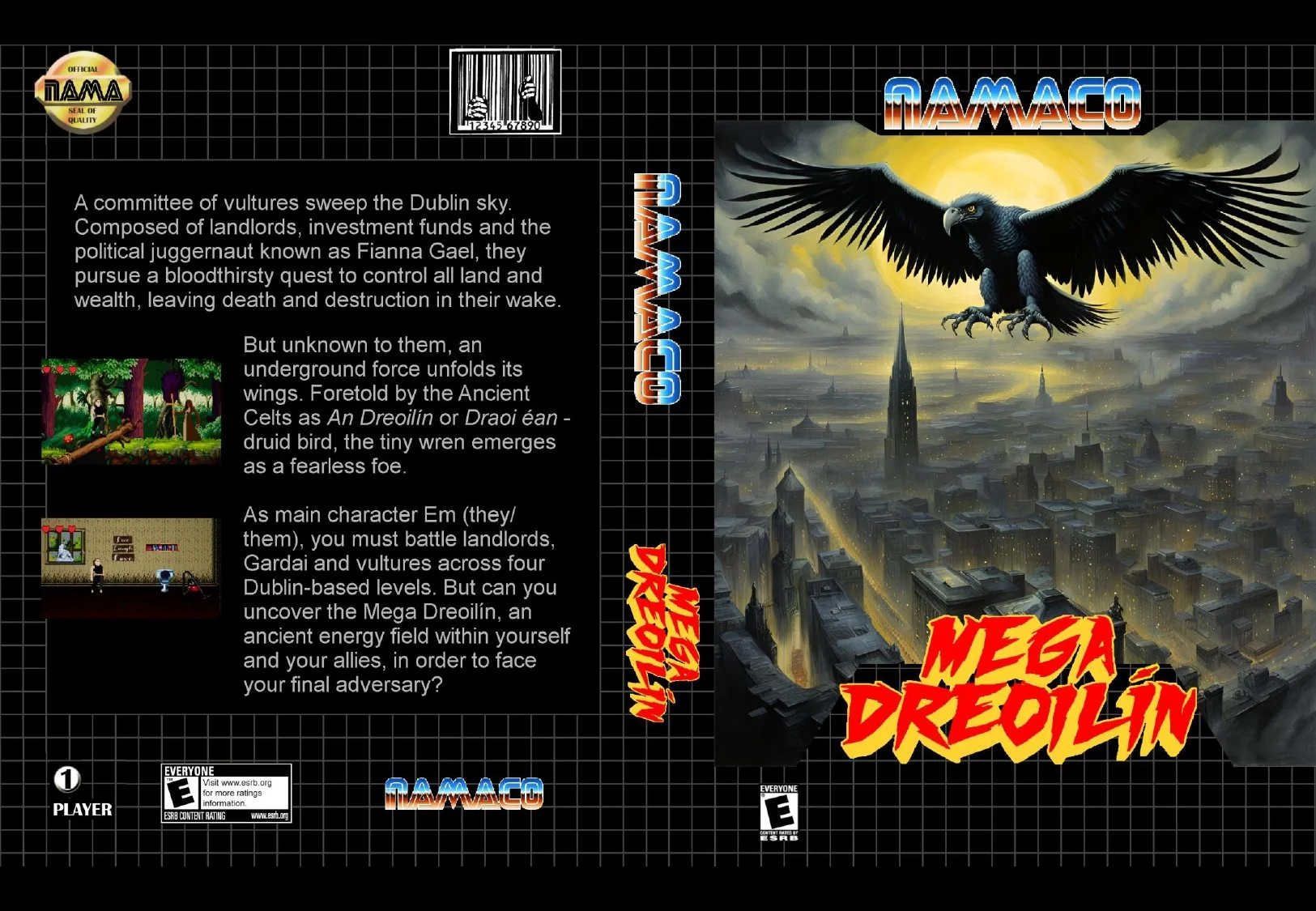
Since its launch at Pallas Projects/Studios, where The Irish Times described it as "one of the best Irish artworks of 2024", Mega Dreoilín has provided thousands of gallery attendees a fun and accessible way to understand housing policy through the simplest and funnest of
mediums - the 16-bit video game. Since 2024 it has been exhibited at the Museum of Literature Ireland (MoLI), VISUAL Carlow, PS2 Belfast, and NCAD. In 2025, it was selected for the Artworks Award at VISUAL Carlow.
Donal from Namaco also appeared on Shannonside FM as part of the IDEA Awards promotion, which you can listen to here: https://www.shannonside.ie/podcasts/lets-talk/roscommon-mans-housing-crisis-video-game-shortlisted-for-national-award-300212
The Séance of Blake Manor
The Séance of Blake Manor is a supernatural whodunnit set in 1897 Ireland - a meeting of Agatha Christie and Dracula. Sandwiched between significant moments in Irish history - the famines and the 1916 Rising - it offers a rare window into the history and mythology of that time. With characters from a range of backgrounds - upper class Protestants, working class Catholics, the first Irish Traveller to appear or be voiced in a videogame, etc - it paints a rich picture of life in Ireland at the time.
The story revolves around working-class Dublin detective, Delcan Ward, who finds himself invited to the titular Blake Manor to investigate the disappearance of Evelyn Deane, daughter of the slumlord who owned the building in which Declan’s brother died tragically.
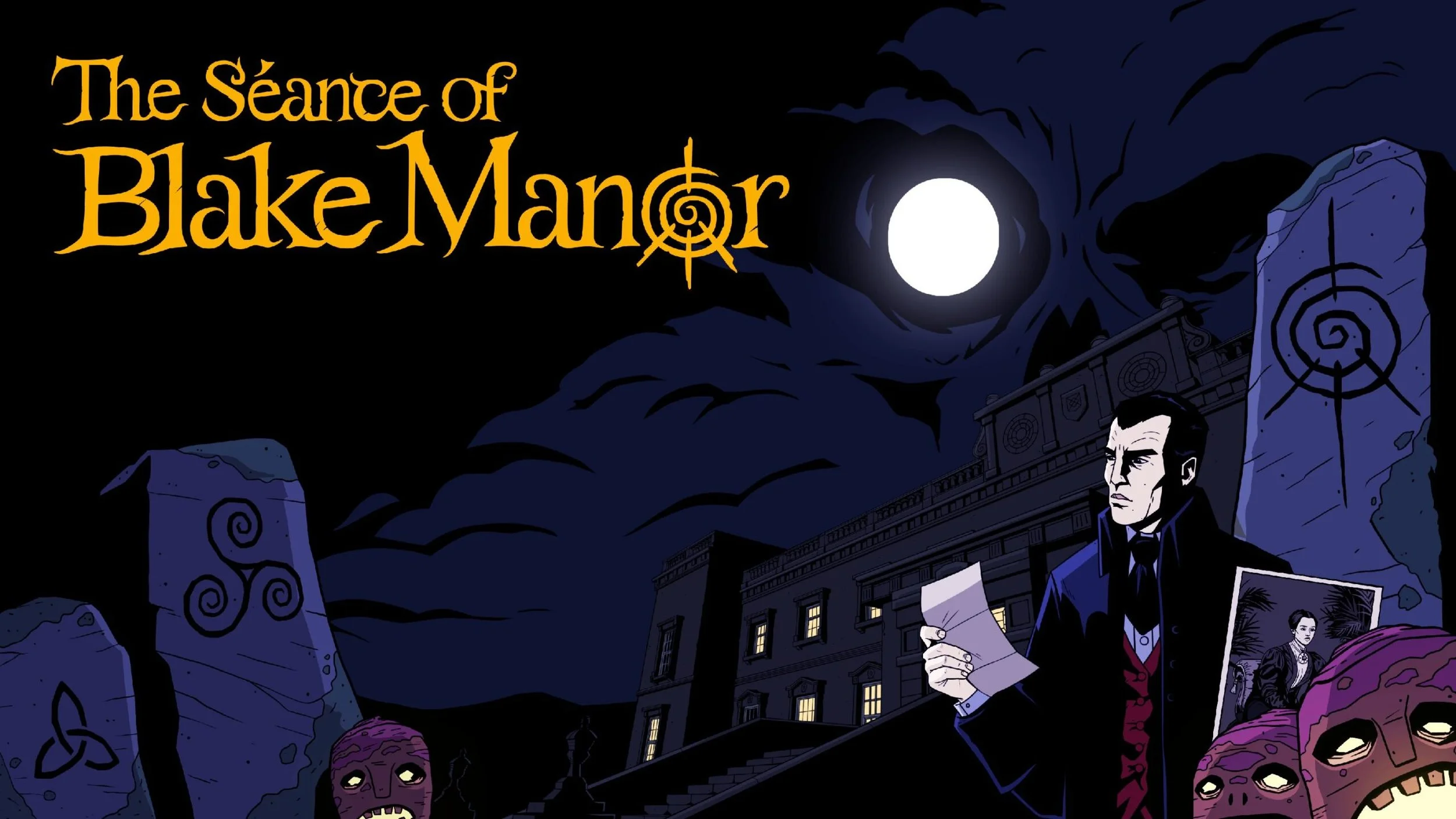
Evelyn, along with 24 others, came here for the promise of a glimpse into the afterlife at the séance - happening in three days' time. Every action undertaken in the investigation brings Ward closer to the séance, so he must use his time wisely as he chases the trail of the missing woman and investigates her contemporaries for motive, means, and opportunity.
Each guest - now suspect - has befallen some tragedy that has led them here, desperate to find meaning in the face of death. Exploring their stories helps players to narrow down suspects. The manor is a perfect spot for a séance as it is haunted by generations of victims of colonial oppression.
The game launched on October 27th to great praise, featuring on numerous ‘Game of the Year’ lists, and winning many awards. It explores many aspects of Irish history and culture sharing them with a global audience. This includes the famine, the Cromwellian invasion, the Magdalene Laundries, the fading of Paganism, and the Tuatha de Dannan
Gleaning Sunday
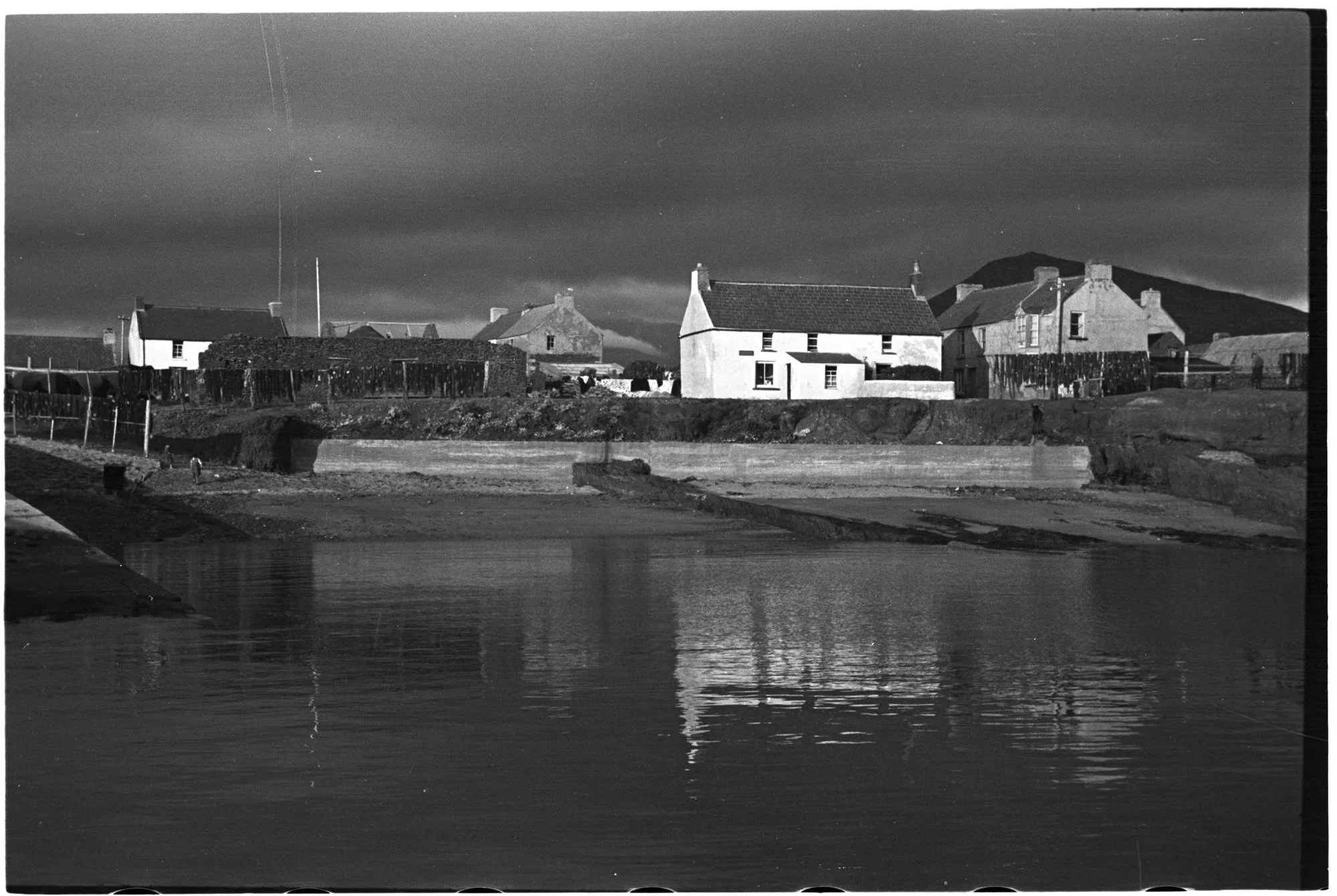
Gleaning Sunday (Domhnach na nDeascán) is a game set in the real-life village of Baile na nGall in the West Kerry Gaeltacht of Corca Dhuibhne. The game takes place around the time of the gleaning, i.e., when the leftover harvest is collected. It's a tender tale of love and friendship over the years.
This is the first game based in the area with a focus on a slowly unwinding experience of a neurodivergent queer girl in the early 1900s. This is unique in that we know, of course, folks like this existed, but back then were not documented. So, while the story is fictitious, care has been taken to represent these themes in an impactful way. As well as that, Eibhlín Feirtéar and Máire Ní Shuilleabháin are native Irish speakers, as it is set in the Gaeltacht. Therefore, the Irish language is an important part of the tale, and through it, we see the tenderness between them both through language.
The developer, Úna-Minh Kavanagh, is an Irish Asian woman adopted from Vietnam but with deep connections to the Gaeltacht through her adoptive grandfather, Padruig Ó Cíobháin, who was a native Irish speaker from Baile na nGall. Úna-Minh spoke to Raidió na Gaeltachta about this particular game as the station has one of its main studios there as well.
Úna-Minh did a lot of research into this, gleaning Irish tradition and featured photos and elements from Dúchas.ie, National Folklore Collection, UCD, as well as information on harvest knots as documented by the National Museum of Ireland.